 FPS Calculator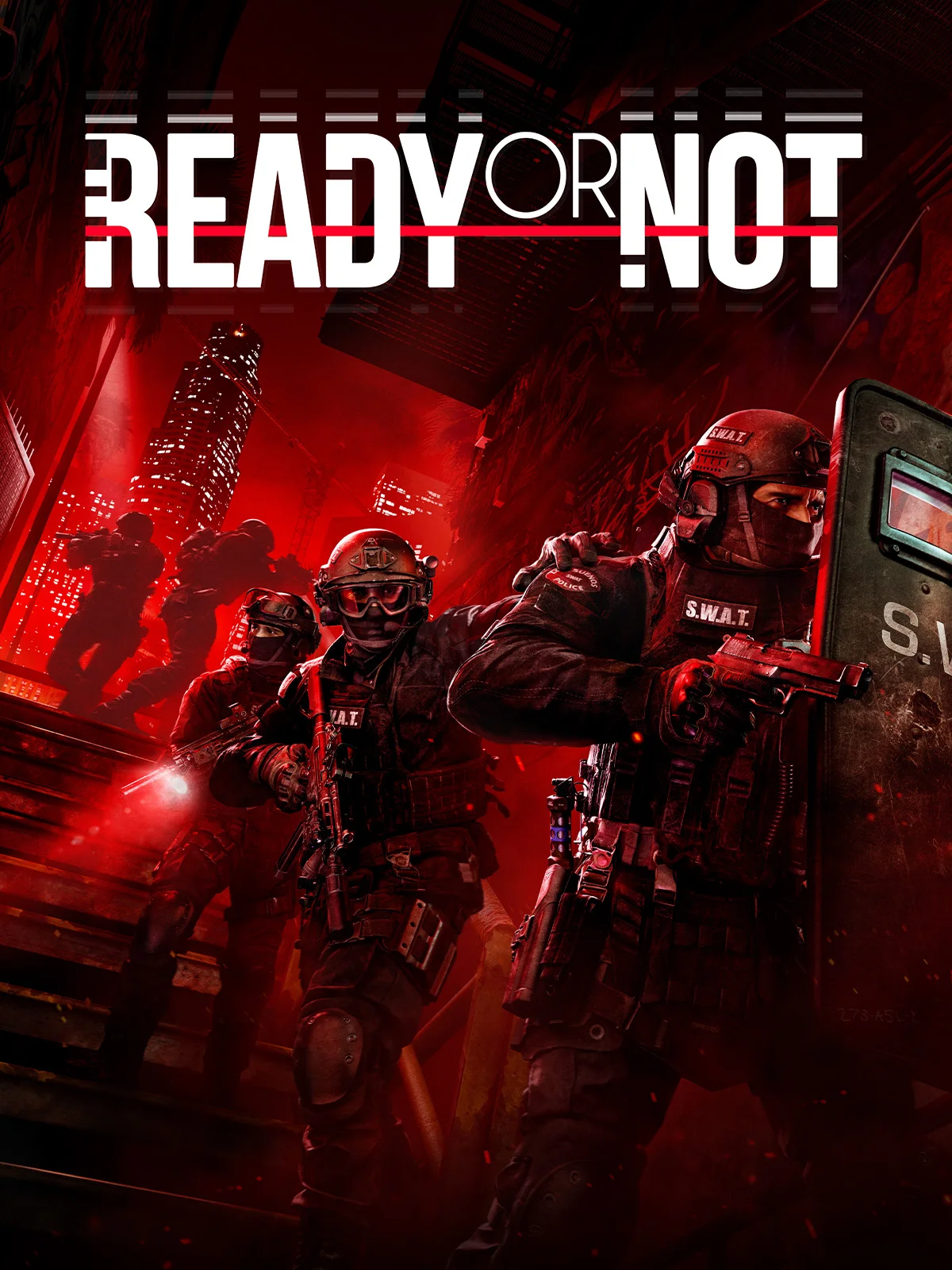
Can I Run Ready or Not on A750?
Ready or Not FPS Benchmark and Performance Analysis
Based on our model, Intel Arc A750 is capable of running Ready or Not. Expect roughly 62 FPS at 1080p high — smooth for most players. Not sure whether Intel Arc A750 can keep up with Ready or Not? Below you'll find our performance projection at 1080p high along with 1440p scaling data.
Ready or Not FPS Benchmarks on A750
| Resolution | Settings Preset | Avg FPS | 1% Low FPS | Verdict |
|---|---|---|---|---|
| 1080p | Competitive (Low) | 78 FPS | 52 FPS | Good |
| 1080p | High | 62 FPS | 41 FPS | Playable |
| 1440p | High | 46 FPS | 29 FPS | Playable |
| 1440p | Ultra | 35 FPS | 22 FPS | Low |
| 4K | High | 26 FPS | 15 FPS | Low |
Benchmarks are estimated by our performance engine. Actual results may vary.
Best Settings for Ready or Not on A750
- Display Mode
- Fullscreen
- Resolution
- 1920×1080
- V-Sync
- Disabled
- Texture Quality
- Medium
- Shadow Quality
- Medium
- Anti-Aliasing
- FXAA
- Effects Quality
- Medium
- Post-Processing
- Medium
- Ambient Occlusion
- Disabled
Performance Analysis
Intel Arc A750 is estimated around 62 FPS at 1080p high in Ready or Not. At 1440p, that typically translates to around 46 FPS with similar quality targets. This places the card in the mid tier for this title, with a playable experience profile. Intel Arc A750 can run Ready or Not reliably, but smart setting choices matter for consistency.
Ready or Not is a tactical SWAT shooter built on Unreal Engine 4, requiring hardware capable of rendering detailed indoor environments while simulating complex AI behavior for suspects and hostages simultaneously. The CPU is stressed by demanding AI pathfinding and physics calculations across large maps, while the GPU handles high-fidelity lighting and texture work typical of UE4 titles. An SSD is recommended to reduce load times for the game's large, detail-rich mission maps.
Intel Arc A750 supports XeSS upscaling. In titles where Ready or Not enables XeSS, enabling it at Quality mode can provide a noticeable frame rate improvement with minimal sharpness loss compared to native resolution.
- Use a medium/high mix and prioritize stable frame times over peak FPS spikes.
- Use selective ray tracing (shadows/reflections) and avoid ultra RT presets.
- Prioritize texture quality and reduce volumetrics/shadows first
Bottom line: Ready or Not on Intel Arc A750 is playable, and optimization has a measurable impact.
Frequently Asked Questions
- Can Ready or Not run on 8 GB RAM for both minimum and recommended specs?
- Yes, Ready or Not requires only 8 GB RAM for both minimum and recommended configurations, making it accessible to a wide range of systems without needing a RAM upgrade.
- Does Ready or Not support AMD FSR or NVIDIA DLSS for performance boosts?
- Ready or Not includes support for NVIDIA DLSS and AMD FSR upscaling technologies, allowing players with lower-end GPUs to achieve smoother frame rates at higher resolutions by rendering at a lower internal resolution.